Part 1 of 2
Cross-border business transfers
Conversion and transfer joined in one journey, so businesses can settle with overseas partners without a bank detour.
Before: bank-led settlement - Identify overseas obligation
- Approach bank for forex
- Obtain foreign currency
- Arrange partner payment
- Confirm funds received
Fig. 1 Two services, one payment
Businesses bought currency at a bank, then arranged a separate transfer. Settlement took days and several logins.
Fig. 2 Designing from the gateways up
I mapped every step the payment gateways required, then designed a journey that hides none of them.
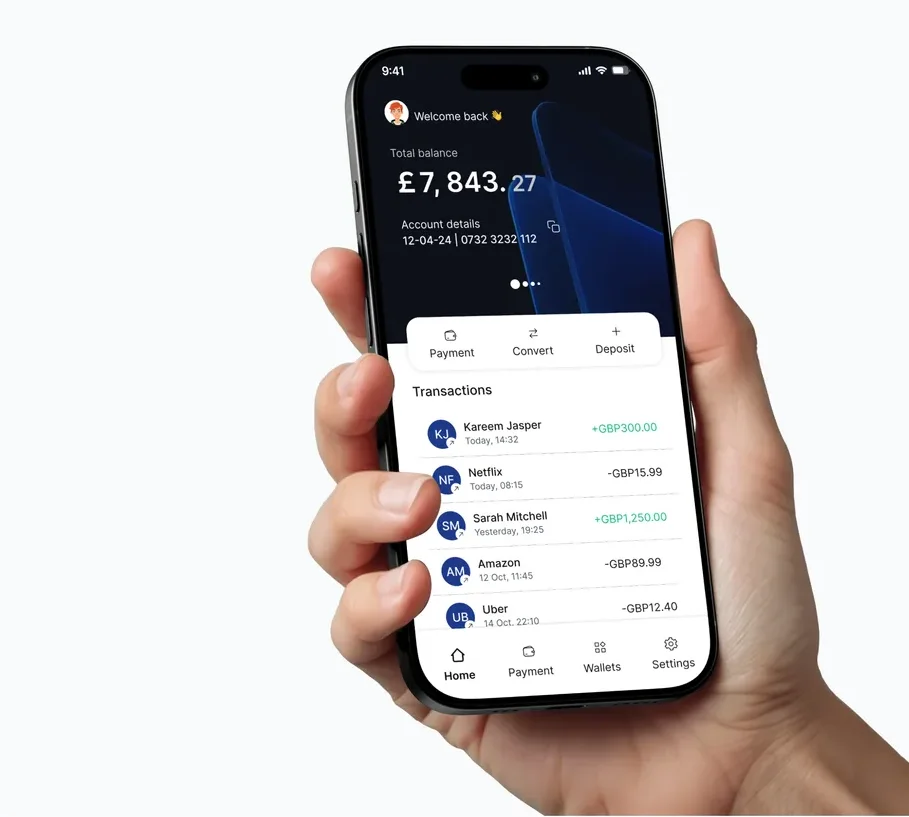
Fig. 3 One sign-on, start to finish
Single sign-on carries businesses from funding to transfer without logging in again.
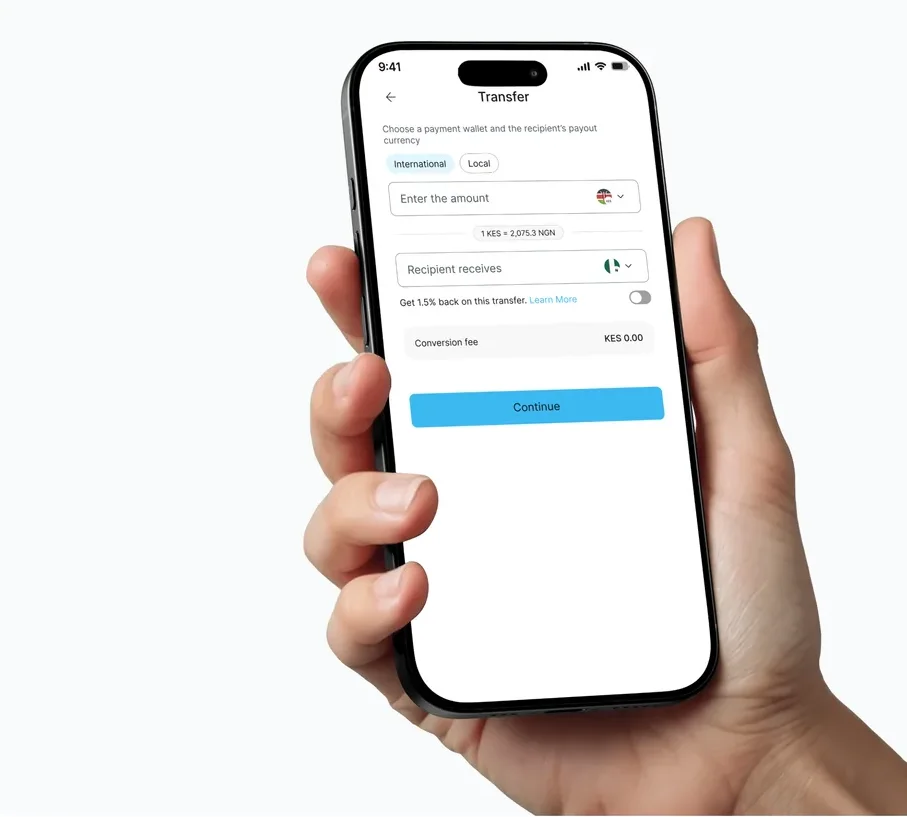
Fig. 4 See the real cost before paying
Amount, rate, fees and what the partner receives sit together before anyone authorises.
After: one connected journey - Sign in to Swiftpoint
- Select destination and currencies
- Enter recipient and amount
- Review rate and total cost
- Authorise transfer
- View status and record
Fig. 5 The new flow
Sign in, choose currencies, add recipient, review the total, authorise, track.
Fig. 6 Submitted isn't settled
Clear status language separates a sent payment from a completed one, so nobody pays twice.
Read the full write-up
Problem
Businesses trading across Sub-Saharan African markets struggled to convert currencies and pay overseas partners. Buying foreign exchange through a bank and then arranging a separate transfer delayed trade settlement.
The challenge was to connect those steps in one understandable journey while respecting the steps required by the underlying payment gateways.
Hypothesis
If businesses can convert currency and send cross-border transfers from one Swiftpoint account, they can settle trade with fewer handoffs and less repeated sign-in.
An integrated journey should also make the relationship between the amount sent and the amount received easier to understand before the payment is authorised.
Goals
- Let businesses settle cross-border obligations through one journey that connects conversion and payment.
- Fewer handoffs than the bank-led process, less time to submit a valid transfer, and a clear understanding of the rate and recipient amount.
Measured by: Task completion, repeated sign-ins and time from starting a transfer to submitting it. Recipient settlement time is measured separately from interface speed.
What I did
- I examined the payment gateways to understand every step users needed to fund, convert and transfer — this shaped how the interface could connect the journey.
- I designed a single sign-on experience to remove repeated account access as users moved between payment and transfer.
- I mapped gateway responses to understandable confirmation and status screens, to review with the technical team.
My role
My contribution was turning payment-gateway requirements into a user journey, and designing account access that reduced interruptions during payment and transfer.
Solution
Currency conversion and cross-border payment become one connected Swiftpoint experience, with single sign-on carrying businesses through to settlement.
The transfer amount, conversion rate, fees and recipient amount appear together before authorisation, so businesses can judge the payment before committing.
Key decisions
- Connect conversion and transfer, so businesses can follow what they pay and what their partner receives.
- Use single sign-on across the payment journey.
- Distinguish a submitted payment from a completed settlement, with clear status language for anything still processing.
Trade-offs
- Keeping conversion and transfer separate lets each service run independently but leaves users to coordinate settlement themselves. A connected journey removes those handoffs.
- The interface can simplify starting a transfer, but availability, quotes and settlement timing still depend on the services behind each corridor — the design has to be honest about that.
Validation plan
- Business users complete the same overseas payment through the bank baseline and through Swiftpoint. Observe whether they understand currencies, recipient details, conversion and the next action.
- Test failure states: insufficient funds, unavailable quote, interrupted processing and delayed payment. Can people tell the current state and recover without paying twice?
Outcome and next steps
A gateway-informed transfer design with single sign-on supporting continuity through the payment process, aimed at less effort when settling cross-border trade.
Impact is assessed through fewer handoffs, fewer repeated sign-ins and shorter completion time. Any “best rate” claim would need a defined comparison of quotes and total cost.
Cross-border transfer design means connecting the user's commercial goal with the steps of the payment infrastructure. The gateway review and single sign-on work addressed the continuity of that journey.
Next, I'd test whether businesses understand both the cost of conversion and the progress of settlement — especially when a transfer can't complete immediately.